
The factory had more data than ever. It still couldn't see what was coming next.
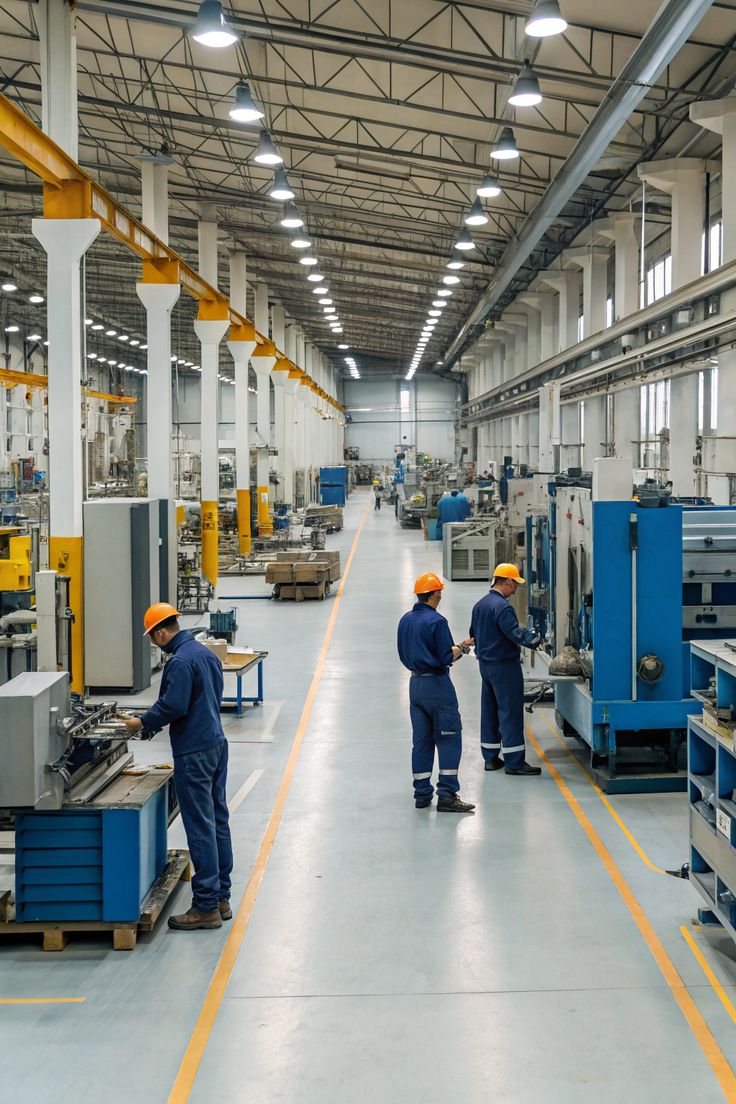
Modern factories generate thousands of operational signals every day. Machines report status and runtime. Production systems track output. ERP systems know what has been ordered. Quality teams record defects. Warehouses know what is in stock. Maintenance teams know which assets have failed.
Yet when production slows down, the answer to a simple question “Why?”-can still take hours to find.
The problem isn't a lack of manufacturing data.
It's that the data rarely arrives with enough context to become intelligence.
The Challenge
Manufacturing environments have grown into complex technology ecosystems.
MES and SCADA systems capture production and machine information. ERP platforms manage commercial and inventory processes. PLCs, sensors and IoT infrastructure generate equipment signals. Quality, maintenance and supply-chain information often live in separate systems.
Each system can be working perfectly while the factory as a whole remains difficult to understand.
A production manager may see that OEE has fallen without immediately knowing whether the loss came from availability, performance or quality. Procurement may know that a material is running low but not which scheduled orders will be affected. Maintenance teams may only discover an abnormal machine condition after it has become unplanned downtime.
And by the time management receives the production report, the opportunity to intervene may already have passed.
Manufacturing doesn't need another static dashboard.
It needs to connect production, machines, quality, materials and operational context.
The Solve
DataCaffé built Lumaara as a Manufacturing Intelligence platform.
Rather than replacing the technology already running a plant, Lumaara is designed to connect operational information across manufacturing systems and turn fragmented signals into decision-ready intelligence.
Its architecture supports integration with manufacturing and enterprise sources such as ERP, CRM, inventory systems, APIs and files, with an operational intelligence layer built around rules, optimisation, alerts, copilots and dashboards.
Production intelligence brings together signals such as yield, throughput, scrap, first-pass quality, defects, line performance and shift performance. Instead of stopping at the KPI, teams can investigate what is contributing to the loss.
The same principle applies to OEE.
A declining OEE figure becomes more useful when the business can examine the underlying relationship between Availability × Performance × Quality, and connect those losses with production events.
Supply-chain intelligence adds another dimension. Inventory availability and material constraints can be considered alongside production requirements, helping teams identify potential shortages before they turn into missed production schedules.
Equipment data creates the foundation for more proactive maintenance. Instead of relying only on scheduled maintenance or reacting after failure, operational and condition signals can help identify abnormal behaviour earlier.
The aim is to move the operating model from:
Machine fails → Production stops → Maintenance reacts
toward:
Signal changes → Anomaly identified → Risk understood → Action taken
And intelligence doesn't have to remain in the management office. Plant-floor copilots can make operational information more accessible to supervisors and operators in the context in which decisions are actually being made.
The Impact
The biggest change is not another dashboard.
It is the quality of the questions a factory can answer.
Instead of asking:
“What happened yesterday?”
teams can begin asking:
“What is happening now?” “Why is it happening?” “What is likely to happen next?” “Where should we intervene?”
Production teams gain clearer visibility into bottlenecks and performance losses. Maintenance becomes more proactive. Material availability becomes connected to production demand. Quality signals become part of the wider manufacturing picture. Leadership gets a more coherent view of plant performance.
The factory already had the data.
Lumaara turns it into Manufacturing Intelligence.
Bring the same pattern to your organisation.
Tell us the problem. A senior partner replies inside one business day.
More proof
All case studies →AI adoption moved faster than enterprise governance.
Enterprise AI rarely arrives through one carefully controlled programme.
ReadAn ESG number is only as credible as the evidence behind it.
For many organisations, ESG reporting still begins with spreadsheets, emails and a long process of chasing information. Facilities provide energy and water data, procurement reaches out to suppliers, finance shares operational figures, sustainability teams calculate emissions, and supporting evidence sits across folders and systems. By the time the information reaches a sustainability report, one fundamental question can become surprisingly difficult to answer: where exactly did this number come from?
Read